|
Princess Kisses frog
Xenia, Princess of Saxony, does her bit at Leipzig Zoo for WAZA’s ‘2008 – Year of the Frog’ campaign

April 25, 2008 - One hundred primary-school pupils and twenty kindergarten children experienced an unusual, contemporary version of the fairy tale ‘The Frog Prince’ at Leipzig Zoo: there was a visit by Xenia, Princess of Saxony, who has a soft spot for amphibians, and who demonstrated this to the children by giving a frog a symbolic kiss. The twenty-one-year-old was at the zoo as a celebrity ambassador for the ‘2008 – Year of the Frog’ campaign, at the invitation of the zoo director, Dr Junhold.
The princess represents dynamism and a forward-looking approach’ said Jörg Junhold, explaining why a young princess was chosen for the initiative, to draw attention to amphibian extinction across the world. In taking part, the princess joins in with the efforts made by Sir David Attenborough, who is the patron of the global amphibian campaign and has already been able to take on board personalities such as Jean-Michel Cousteau and Jane Goodall. ‘Frogs should be given the same kind of environmental lobbying as ocean mammals or big cats’, said Xenia, Princess of Saxony, who found out on the spot which amphibian projects Leipzig Zoo supports. The zoo currently has twelve species of amphibians, two of which are categorised as ‘endangered’ by the International Union for Conservation of Nature (IUCN): the Blue Poison Dart Frog and the Vietnamese Salamander. Both species can be seen in the ‘Arche’ (Ark) discovery centre, where visitors’ attention is also drawn to the amphibian crisis.
The topic of amphibian protection has never been so relevant. Of the roughly 6,000 frogs, toads, salamanders and caecilians known today, thirty to fifty per cent are at risk of extinction. This makes amphibians the most endangered category of vertebrate at present. The reasons for the rapid extinction of the species are environmental pollution, climate change and the increasing destruction of their habitats, as well as the introduction of foreign species and a parasitic chytrid fungus. This fungus, originally only indigenous to South Africa, is spreading at lightning speed through Central and South America and Australia. It attacks the amphibians’ sensitive skin. Wherever the infection proliferates, up to eighty per cent of animals die within only a few months, which can have a devastating effect on ecological communities.
top
The Bear Necessities for Conservation and Welfare
WAZA Member WIN recently published its latest title "Bears: Health and Management"
5 December 2007 - A new conservation volume published by Wildlife Information Network to assist in the understanding and treatment of bear diseases and management has been released this week. Aimed specifically at the conservation communities around the world, the volume covers the natural history, husbandry, diseases and treatment of bears, enhanced by an extensive library of texts on bears and their management.
The module was sponsored by the World Society for the Protection of Animals (WSPA) who, recognising the acute worldwide need for accurate and properly referenced scientific information on these beautiful animals, funded this programme. "I am delighted to have worked closely with WSPA on this project" said Iain Boardman, chief executive of WIN, "as our joint areas of expertise has resulted in an exceptional information resource that will be used by zoos, rehabilitation centres, sanctuaries and academic institutions around the world. All credit must go to WSPA for having that vision".
This volume is part of the Wildpro® Multimedia series and can be found on the WIN Website at www.wildlifeinformation.org.
top
WAZA Conference Highlights World's Amphibian Crisis
Zoos and Aquariums Responding through Amphibian Ark
BUDAPEST Aug. 30, 2007
With one-third to one-half of the world’s amphibian species in danger of becoming extinct in the near future -- the largest mass extinction since the disappearance of the dinosaurs -- one of the main topics of discussion among the over 200 attendees at the 62nd annual conference of the World Association of Zoos and Aquariums (WAZA) is Amphibian Ark and its 2008 Year of the Frog campaign, a call to action for the zoo and aquarium community to help.
The conference, themed "Links Between Ex Situ and In Situ Conservation of Native Species," is being hosted Aug. 26-30, 2007, by the Budapest Zoo. Other workshop topics at the gathering include current veterinary issues such as avian flu, bluetongue, and other emerging diseases; Frozen Ark, a cryobiological consortium focused on conserving the genomes of rare species; marine mammal standards; and supporting zoos in need of assistance.
In response to the amphibian crisis and as part of the overall Amphibian Conservation Action Plan (ACAP) prepared by the world’s leading conservationists, WAZA has joined with the IUCN Conservation Breeding Specialist Group and the IUCN Amphibian Specialist Group to create Amphibian Ark. Amphibian Ark will develop, promote, and guide short-term captive management of threatened amphibians, making possible the long-term survival of species for which adequate protection in the wild is not currently possible. Captive management is a vital component of ACAP’s integrated conservation effort, buying valuable time to mitigate threats for species that would otherwise go extinct. Amphibian Ark will bring priority amphibian species into "protective custody" in dedicated biosecure facilities at zoos, aquariums, and other institutions around the world for safekeeping and breeding. These rescued amphibians will be released back into the wild when the original threats have been controlled.
"It’s imperative that the world zoo and aquarium community plays an active role in working to save the planet’s critically endangered amphibian species," said Karen Sausman, president of WAZA. "Zoos and aquariums are uniquely suited to assist with the captive management needs of Amphibian Ark, and have the added value of being able to educate the millions of visitors coming through our gates every year about this critical situation. As leading partners in animal conservation, it’s both our obligation and our privilege to help these glorious animals." We invite all people on the planet to help amphibians to survive by signing a global petition and contributing to fund this initiative.
The world conservation community has named 2008 "The Year of the Frog" as a means of raising awareness of the crisis among media, educators, corporations, philanthropists, governments, and the general public, and to generate the $50-$60 million in funding required for Amphibian Ark. Sir David Attenborough, patron of the 2008 Year of the Frog campaign, said, "The global zoo and aquarium community has taken on this challenge with enthusiasm and is providing appropriate facilities and breeding grounds within their institutions. But implementation calls for financial and political support from all parts of the world...Without an immediate and sustained conservation effort to support captive management, hundreds of species of these wonderful creatures could become extinct in our own lifetime".
Amphibians are severely affected by habitat loss, climate change, pollution and pesticides, introduced species, and over-collection for food and pets. However, while habitat destruction is the major threat, the most immediate cause of the amphibian crisis is a parasitic fungus called amphibian chytrid, a disease that is deadly to hundreds of amphibian species. Global climate change may have exacerbated the problem. Currently unstoppable and untreatable in the wild, the fungus can kill 80 percent of the native amphibians within months.
top
Zoos und Aquarien wollen Kermit & Co. helfen
Welt-Zooverband richtet erstmals Kurs für deutschsprachige Tierpfleger aus
Bern/Chemnitz, 25. Juni 2007
Klimawandel, Lebensraumverlust, Seuchen und andere Gefahren setzen weltweit den Amphibien zu. Bereits sind ein Drittel der rund 6000 Frösche, Kröten, Salamander und Molche auf der roten Liste der gefährdeten Arten aufgeführt und über hundert Arten sind in den letzten Jahren ausgestorben. Fachleute befürchten, dass ohne gezieltes Eingreifen den Amphibien ein ähnliches Schicksal droht, wie vor 60 Millionen Jahren den Dinosauriern. Dabei wird es in vielen Fällen nicht möglich sein, Arten nur durch Massnahmen in ihrem natürlichen Lebensraum zu erhalten, sondern man wird sie auch langfristig in menschlicher Obhut züchten müssen.
WAZA, der Weltverband der Zoos und Aquarien hat deshalb, in Zusammenarbeit mit dem Welt-Naturschutzbund (IUCN), das Projekt „Amphibian Ark“ ins Leben gerufen. Im Rahmen dieses Projekts sollen langfristige, koordinierte Zuchtprogramme auf die Beine gestellt werden, die von Zoos und Aquarien sowie Privatpersonen unterhalten werden sollen.
Um die Zoos im deutschsprachigen Raum auf Ihre Rolle in dieser Amphibien-Arche vorzubereiten, hat der Weltzooverband gmeinsam mit seinen deutschsprachigen Mitgliedverbänden (VDZ, DWV und DTG), dem Bundesverband der Berufstierpfleger (BdZ), dem deutschprachigen Zoopädagogenverband (ZPV) und der Deutschen Gesellschaft für Herpetologie und Terrarienkunde (DGHT) einen Kurs organisiert, der vom 27. bis 30. Juni im Tierpark Chemnitz stattfindet. An diesem Kurs, der finanziell auch vom schweizerischen und vom österreichischen Zooverband sowie der Stiftung Artenschutz unterstützt wird, nehmen über 50 Personen aus Deutschland, Österreich, der Schweiz und Belgien teil. Sie wollen Erfahrungen austauschen und neue Kenntnisse und Fertigkeiten für die Haltung, die Zucht und den Schutz von Amphibien erwerben.
Nach dem Schneeball-Prinzip sollen die Ergebnisse des Kurses innerhalb der deutschsprachigen Zoogemeinschaft weitervermittelt werden, mit dem Ziel, die für ein erfolgreiches Zuchtprogramm notwendige Zahl ausgebildeter Amphibienpfleger möglichst rasch zu erreichen. Ferner soll der Kurs die Grundlage für eine fruchtbare Zusammenarbeit zwischen Zoos und pivaten Haltern von Amphibien bilden.
top
WAZA Member to Provide Free Wildlife Information for the Developing World
An Initiative of the Wildlife Information Network
Wildlife Information Network (WIN), a UK-based charity and affiliate member of WAZA that has for fifteen years published invaluable wildlife health and management information, is to make all of its information resources Open Access to the developing world.
This major move, the first step in WIN’s Open Access initiative, will offer an ever-growing database of unique conservation information free of charge to every vet, wildlife decision-maker and student in over 109 countries. Chief Executive Iain Boardman said, ‘Considering the fact there are currently no such resources available to the developing world, the potential impact of this step on the lives of both animals and their carers is huge.’
As of 15 March 2007, anyone who visits the WIN website – www.wildlifeinformation.org - from a developing country will be redirected to a free login page. From there, they will be able to access up-to-date and fully referenced information on species, diseases, treatment methods and husbandry guidelines without restriction. ‘We have always offered our resources free to the developing world but until now this has only been possible on a much smaller scale,’ said Mr Boardman. ‘The feedback from those who have used it has been overwhelmingly strong, and thus we’re absolutely delighted to finally be able to offer our information so much more widely.’
WIN is thoroughly supported by its current Western subscribers in this move. Director of Animal Health at Saint Louis Zoo, Dr Randy Junge, said “The donation of access to the WIN website to organizations in developing countries is a truly great service.” International zoo vet Andrew Greenwood said “Educating people in how to help threatened species is a major part of the battle. This is a move that must not go unnoticed.’
It is hoped that the initiative will also develop relationships between conservationists and academics in the developing world and the West through WIN’s membership directory.
top
World Zoos and Migratory Species Convention conclude Partnership Agreement
WAZA – The World Association of Zoos and Aquariums and CMS – The Convention on Migratory Species have signed a formal Partnership Agreement. The Agreement recognizes that the two organizations pursue common goals in the conservation of ecosystems and the protection of migrating species, and acknowledges the value of the ex-situ conservation activities carried out by WAZA members for significantly reducing biodiversity loss by the year 2010, a target endorsed by the World Summit on Sustainable Development and adopted by the Convention on Biological Diversity.
In conjunction with the 31st Standing Committee of the Convention on Migratory Species (CMS), held from September 27 to 29 at Bonn, Germany, the CMS Secretariat and WAZA signed a partnership agreement with a view of strengthening the already good relationships between the two organizations. The CMS (also known as Bonn Convention) is an intergovernmental treaty, concluded under the aegis of the United Nations Environment Programme, concerned with the conservation of wildlife and habitats on a global scale, which has been ratified by 98 nations Parties from Africa, Central and South America, Asia, Europe and Oceania. WAZA is the only body unifying zoos and aquariums at the global level.
The Agreement recognizes that the two organizations pursue common goals in the conservation of ecosystems and the protection of migrating species. It acknowledges the value of the “ex-situ” (at the zoo/aquarium) conservation activities carried out by WAZA members for significantly reducing biodiversity loss by the year 2010, a target endorsed by the World Summit on Sustainable Development and adopted by the Convention on Biological Diversity, and it notes that the World Zoo and Aquarium Conservation Strategy adopted by WAZA in 2005 calls upon WAZA Members to get increasingly involved in “in- situ” nature conservation.
The agreement provides for enhancing the communication and cooperation between CMS and WAZA. In particular, the two organizations shall keep each other well informed of needs, issues and opportunities that emerge as a result of their activities. This shall be facilitated by the sharing of internal plans, documents and, whenever possible, mission reports. The CMS Secretariat and WAZA shall endeavour to co-ordinate their activities in research, training and public awareness activities, and WAZA shall assist the CMS Secretariat with the provision of science, support and contributions in developing Agreements and the wider work of the Convention in relationship with the other biodiversity Conventions.
The Partnership Agreement covers not only the CMS as such, but also the Secretariats of other international treaties concluded under the auspices of CMS obliging them to regularly share information of mutual interest with the WAZA, such as the Agreement on the Conservation of African-Eurasian Migratory Waterbirds.
top
WAZA launches Virtual Zoo
Berne, 1 June 2006
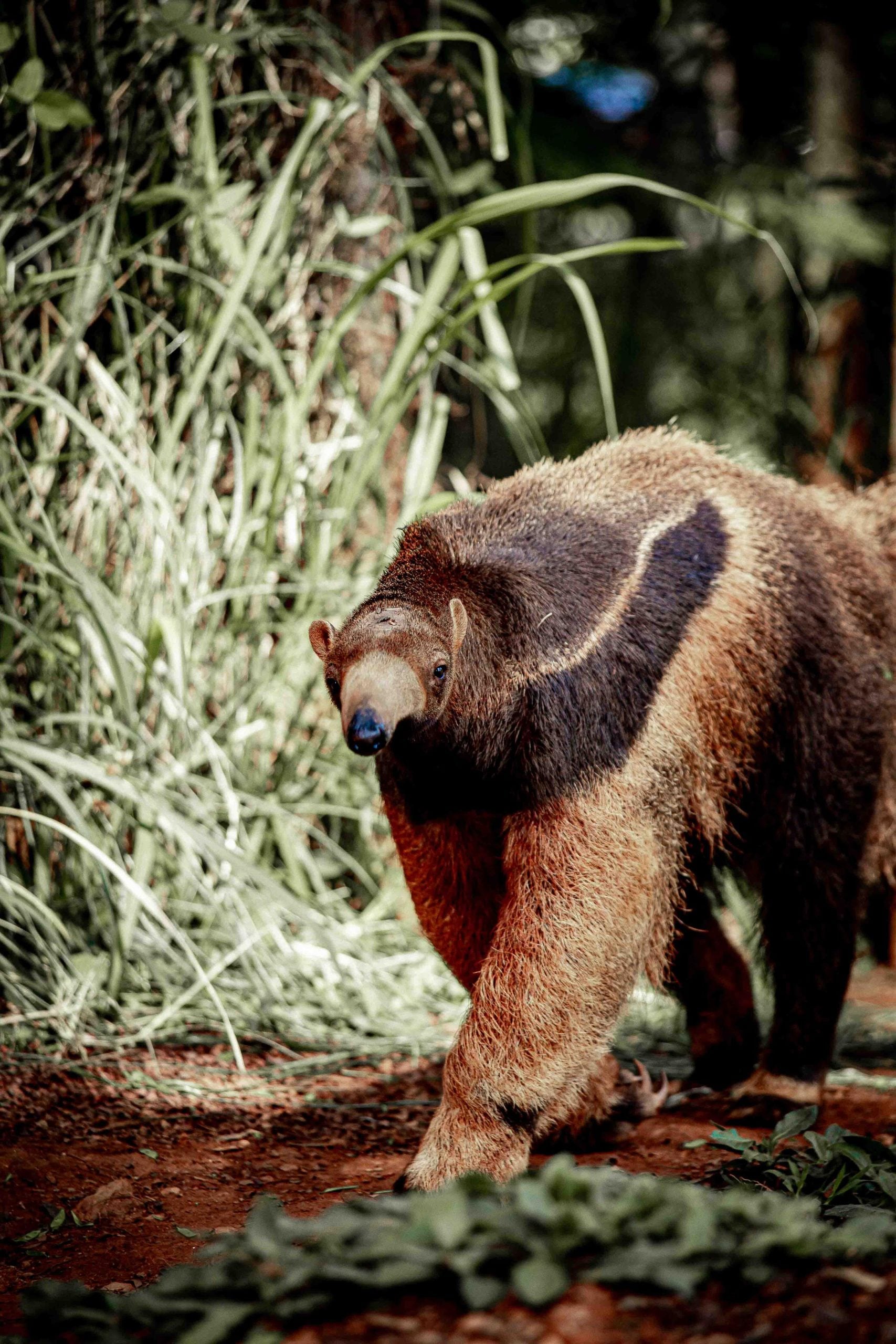
What is a tamandua? Is it true that the Californian condor would be extinct by now if zoos hadn’t established a conservation breeding programme? Does the giant anteater really eat ants? How is the lion called in isiZulu? Are there migratory butterflies? Do you have any idea what a dibbler is and how a numbat looks like? How many European bison are there in institutions participating in the International Studbook, and how many are there (again) in the wild? Can the Galapagos giant tortoise really become older than 100 years? Why do zoos keep gorillas and why do they breed Pacific tree snails? What is the size of a fully grown Orinoco crocodile? How many puppies may a litter of African wild dogs comprise? What is the purpose of a zoo keeping American burying beetles? Is it true that kiwis smell their prey rather than see it? These and hundreds of other questions are answered by WAZA’s Virtual Zoo on www.waza.org.
On 1st of June www.waza.org, the website of the World Association of Zoos and Aquariums has been considerably expanded by the addition of a virtual zoo, informing about animals, both rare and common, visitors may encounter in WAZA member institutions. At the time of opening, the zoo contains 266 species with an emphasis on mammals.
Because WAZA is a global organisation, the collection of the Virtual WAZA Zoo consists of animal species from all parts of the world and includes representatives of a wide range of taxa – from field cricket to gorilla. These are presented in a taxonomic setting – a traditional Zoo with e.g. Primate Complex, Cat House, Bear Pits, Deer Enclosures, Bird House, Aquarium etc., which makes it easier to find a particular species.
Each species is presented on a fact sheet which contains several photographs and a distribution map. The scientific name, common names in several languages, and basic information on taxonomy, habitat, population and conservation status are provided. There are boxes containing fun facts, and texts written by some 30 experts giving biological information, reasons why zoos and aquariums keep the species concerned in their custody, and requirements for keeping the animals in human care. The minimum standards quoted are usually those of the Austrian Zoo Ordinance (2005), which is the most recent and most comprehensive legislation in this field. Finally the fact sheets contain links to in situ projects displayed in the Conservation section of the WAZA web site, exhibit presentations on the ZOOLex website, and relevant links to external web sites.
A zoo is never completed, and also the Virtual WAZA Zoo is constantly under construction. The fact sheets will be permanently updated and several animal groups are that are still in quarantine will be added to the collection. An additional GeoZoo, where the animals will be grouped according to geographic distribution and type of habitat, is under preparation.
top
World Zoos and Aquariums Develop Plan to Respond to the Extinction of Frogs
El Valle, 15 February 2006
Amphibians are facing great threats. About one third of the 6000 frog, toad, salamander and newt species are threatened with extinction, more than 120 species have likely become extinct since 1980, and 435 species have declined into a category of greater threat during that time. In October 2005, WAZA, The World Zoo and Aquarium Association, therefore adopted a strong resolution calling on all zoos and aquariums to respond to the global extinction crisis facing the world's frogs and other amphibians. This is part of a wider approach led by IUCN - The World Conservation Union, which encompasses also conservation measures in the field.
Many factors behind the extinction of frogs are still not well understood. However, it is known today that, in some parts of the world, there is a fungus causing the quick extinction of every amphibian species throughout the range. Experts are convinced that, in many cases, the only solution is to conserve them in zoos and aquariums with the hope that the species can be reintroduced to the wild at a later stage. This will require a massive coordinated effort, but it is a key solution in addressing the global amphibian extinction crisis.
With a view to galvanising coordinated action by zoos and aquariums, experts of the Conservation Breeding Specialist Group of the World Conservation Union, representatives of the World Association of Zoos and Aquariums and other stakeholders met from February 12 to 15 at El Valle, Panama, discussing how a global action plan should be implemented. They recommended criteria for prioritizing species and best practices for breeding facilities, and determined the capacity for rapid response.
The meeting envisioned a WAZA coordinateed effort with multiple partners that offers a de-centralized approach with multiple breeding facilities. There was a presumption in favour of the breeding taking place in the range countries of the species concerned. However, the value of backup facilities outside the species' range was recognized. The balance between the size of facility, economics and vulnerability will be determined.
The meeting acknowledged that this ex-situ effort is a 'stop-gap' measure, and called to Governments, the Amphibian Specialist Group of the World Conservation Union and other stakeholders to strive for a rapid response to help address the amphibian extinction crisis.
Examples of current zoo action:
Puerto Rico Toad Species Survival Plan
The El Valle Amphibian Conservation Center
Field research for the conservation of the tomato frogs
Hellbender conservation by St. Louis Zoo
Frog conservation by Perth Zoo
The Betampona Project by the Madagascar Fauna Group
The Masoala Project by Zurich Zoo and the WCS
Research into reproduction of SE Asian frogs
The Swedish Green Toad Project
Conservation of Amphibians in the Valle del Cauca, Colombia
top
|