
Close
Nicole Chaney, Conservation Programs Manager at Cheyenne Mountain Zoo in Colorado, US
Palm oil is found in many of the packaged products lining store shelves, from food and cosmetics to cleaning supplies, yet it remains largely invisible to the people buying them. Few shoppers ever connect that familiar ingredient to a rainforest, let alone to the animals that depend on it. Zoos and aquariums are uniquely positioned to make that connection visible.
Since Cheyenne Mountain Zoo (CMZoo) began working on palm oil-related conservation in 2010, we’ve believed that members of the World Association of Zoos and Aquariums (WAZA) and Association of Zoos and Aquariums (AZA)-accredited facilities are uniquely situated to inspire conservation action because of the animals in our care. We already ask our guests to trust us with the well-being of orangutans, tigers, and countless other species living in our facilities. That responsibility naturally extends beyond caring for those animals to help protect the habitats they depend on in the wild. Guided by WAZA, CMZoo developed the PalmOil Scan app to give guests and global consumers the knowledge and tools to make more informed purchasing decisions that support wildlife and sustainable palm oil production. This app won the 2024 RSPO Innovation Award from the Roundtable on Sustainable Palm Oil (RSPO).
When most people think about palm oil, they think of orangutans and Southeast Asia. While orangutans remain powerful ambassadors for the issue, they represent only part of a much larger story. Palm oil is cultivated throughout the tropics, where its production intersects with the conservation of hundreds of species. Unsustainable production threatens habitats far beyond Southeast Asia, making it essential that our conservation messaging reflects the global nature of both the challenge and the solutions.
In June, CMZoo joined a small delegation of member companies invited by the RSPO and Conservation International (CI) to visit the Ecuadorian Amazon. The trip followed the palm oil supply chain from plantation to processing mill, allowing participants to reinforce their commitments to sustainable sourcing and demonstrate how supply chains can become a force for good. For us, it also offered an opportunity to better understand Latin America’s growing palm oil sector. Ecuador offered a different, less-examined perspective, one where palm agriculture, petroleum extraction, intact rainforest, and Indigenous communities all converge on the same landscape.
The town of Shushufindi, Ecuador sits at the center of that convergence. East of the Andes, where the mountains descend into the Amazon Basin, oil rigs and pipelines share the horizon with vast palm plantations bordering intact rainforest and the ancestral lands of the Kichwa communities. This place illustrates the complexity of industries that humans depend on and habitats animals need. Encouragingly, the RSPO’s presence in Latin America continues to expand, bringing with it measurable progress toward more sustainable production.
During our visit to a large commercial plantation and processing mill, we observed the full arc of production: workers hand-pollinating the disease-resistant hybrid palms growing in the region, to fresh fruit bunches harvested and arriving at the mill within hours for processing. The operation has invested in responsible land management, sustainable plant processes, and practices that reduce environmental impacts. The mill also serves as the only buyer for surrounding growers. The incentives it provides, or does not provide, directly influence the livelihoods and practices of farmers throughout the region.
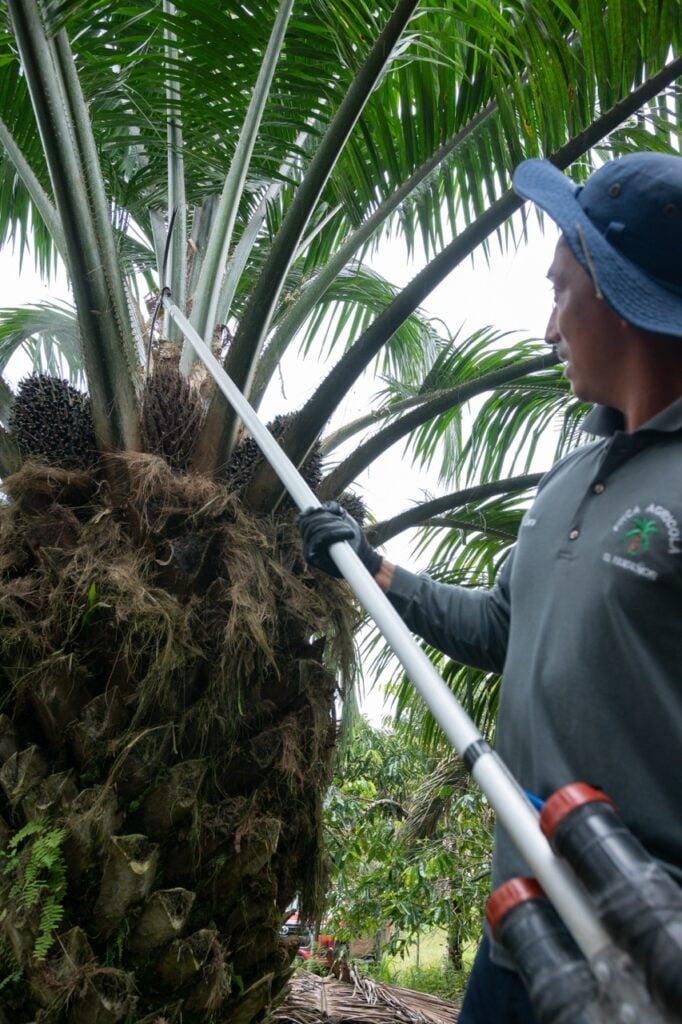
That reality became even clearer during visits to two smallholder farms. One family had previously achieved RSPO certification with support from Asociación Nacional de Cultivadores de Palma de Aceite (National Association of Oil Palm Growers, ANCUPA) but recently lost their certification. The other has been unable to pursue certification because of the significant barriers many smallholders face, including limited access to technology, training, and the documentation the process requires. CI, the ANCUPA, and the RSPO are working to help smallholders overcome these obstacles.
One family has gone even further, improving labor standards and creating greater opportunities for women on the farm despite having no guarantee of a financial return. Yet, the nearest mill currently pays no premium for RSPO-certified fruit, meaning certified and non-certified growers receive the same market price. Currently, the financial incentive that could reward sustainable production is not reaching these smallholders investing in improved practices.
This is where the RSPO, paired with PalmOil Scan, has the potential to help close the gap. By increasing consumer awareness and demand for sustainably sourced palm oil, PalmOil Scan gives companies another reason to purchase RSPO Independent Smallholder Credits. Those purchases can direct premiums back to farmers, strengthening the business case for sustainable production and incentivizing sustainable practices.
Even with these challenges, the RSPO’s presence in Ecuador and across Latin America is already changing outcomes. More growers enter the certification process each year, adopting practices that reduce deforestation, protect waterways, minimize pesticide use, and improve labor conditions. Pursuing certification also connects smallholders with technical support, training, and a global network of buyers and conservation organizations working to strengthen sustainable production. While certification alone cannot solve pricing challenges, it provides transparency and infrastructure needed to build a marketplace that increasingly rewards sustainable production.
Conservation International (CI) ‘s landscape approach is central to that effort. Rather than focusing on individual farms, Conservation International (CI) works across entire production landscapes, aligning smallholders, Indigenous communities, local governments, and industry to develop land-use strategies that protect forests while supporting agriculture. That work includes direct technical and financial support to help farmers meet certification standards and investment in Indigenous-led enterprises that provide alternatives to extractive industries. That final point came into focus during our visit to a Kichwa community, where a matriarch explained that many of the community’s men leave home to work in nearby oil and palm industries simply because few local economic opportunities exist. Supporting community-owned enterprises helps families remain together while continuing to steward the forest that has sustained them for generations.
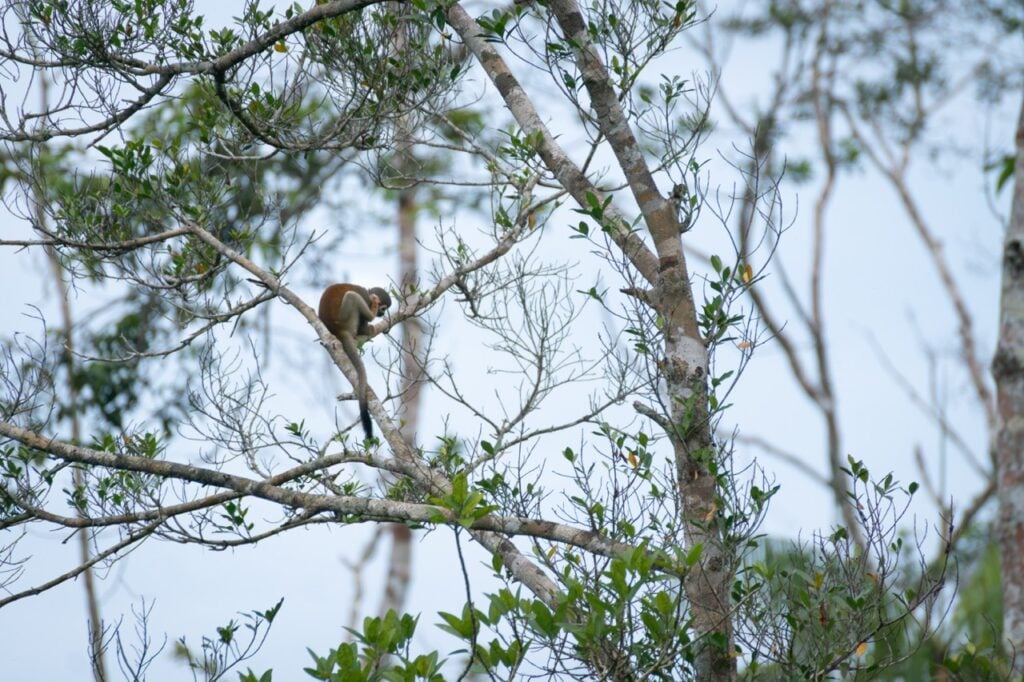
No sector is better positioned to share these stories than accredited zoos and aquariums. We offer something few others can: a direct emotional connection between our guests and the wildlife whose habitat is at stake. Visitors do not need to understand the complexities of the global palm oil trade to care about a jaguar. Our role is to translate that complexity into accessible conservation messaging and provide practical tools that empower action.
PalmOil Scan, regionally managed by Cheyenne Mountain Zoo, Chester Zoo, Auckland Zoo, Zoos South Australia, and Mandai Wildlife Group, allows shoppers to scan a product’s barcode and instantly see whether the company has committed to RSPO-certified sustainable palm oil. Ratings range from “No Commitment” to “Excellent”, making it easy for users to align their purchases with their conservation values while encouraging companies to improve their sourcing commitments. Expanding partnership with WAZA members in Latin America, and India, remains an important opportunity to amplify that impact.
Latin America also expands the conservation stories our institutions can share. Jaguar, Western hemisphere primates, parrots, migratory birds, dart frogs, tapir, and many other species all offer opportunities to speak to our guests about palm oil. The animals and people who live here remind us that every producing landscape has its own ecological, economic, and cultural realities, and effective conservation programs will consider that complexity.
In Ecuador, farmers are already investing in more sustainable practices. What they need now is stronger market recognition and consumer support.
For the global zoo and aquarium community, that presents an opportunity. By helping our visitors understand where palm oil comes from, why sustainable sourcing matters, and how their purchasing decisions can support both wildlife and farmers, we can turn everyday shopping into an act of conservation. The PalmOil Scan app is one practical way to make that connection, but the larger opportunity is collective. When WAZA members share a unified message, together we can help create healthier landscapes, stronger communities, and a more secure future for the species we work every day to protect.

The World Association of Zoos and Aquariums (WAZA) is the global alliance of regional associations, national federations, zoos and aquariums, dedicated to the care and conservation of animals and their habitats around the world.


