
Close
Dave Morgan¹, Margaret Whittaker² and Simon Marsh¹
The publication of the 2025 WAZA Animal Welfare Strategy comes at a time when animal welfare is firmly established as a central pillar of progressive zoo and aquarium practice and resolutely cements it into place. Our understanding of animal welfare has advanced considerably, and this valuable resource captures the developments that have shaped contemporary welfare science.
Despite these advances, one enduring reality remains: animal welfare is not improved by the development of strategies, standards or policies alone. It improves when organisations translate the principles of the written word into practice, ground their decisions upon welfare outcomes, and adapt in response to what animals themselves appear to be telling us.
Viewed through that lens, the value of the updated WAZA Strategy lies not only in introducing new concepts, but in providing a practical and actionable structure for translating welfare knowledge into welfare action. In many respects, this may prove to be its greatest strength. The real test of the Strategy will not be its publication alone, but whether it helps institutions make decisions and implement changes that genuinely improve the lives of the animals in their care.
Few areas of modern zoo practice have undergone as much change over the past few decades as animal welfare. Not so long ago, welfare discussions centred largely on physical health, nutrition, longevity and breeding success. While these are still important indicators, they tell only part of the story.
As we now recognise, animals interact with and experience their world physically, behaviourally, socially and cognitively, and it is the cumulative effect of those experiences that ultimately determines welfare outcomes. As a result, concepts such as choice, control, agency, social relationships, behavioural diversity and appropriate challenge have become increasingly important within contemporary welfare science. The focus has shifted from simply preventing suffering to creating opportunities for animals to experience positive affective states and engage meaningfully with their environment.
This evolution in thinking is reflected throughout the WAZA Animal Welfare Strategy. There is a consistent emphasis on outcomes-focused management and on encouraging institutions to consider not only whether animals are coping, but whether they are genuinely thriving.
The distinction is an important one. An animal may be healthy, adequately nourished and physically secure, yet still have relatively little opportunity to exercise control over its environment, engage in purposeful activities or experience positive interactions. Increasingly, the sector is recognising that good welfare requires more than competent husbandry. It requires a deeper appreciation of the experiences that define an animal’s daily life and the opportunities we have to shape those experiences for the better.
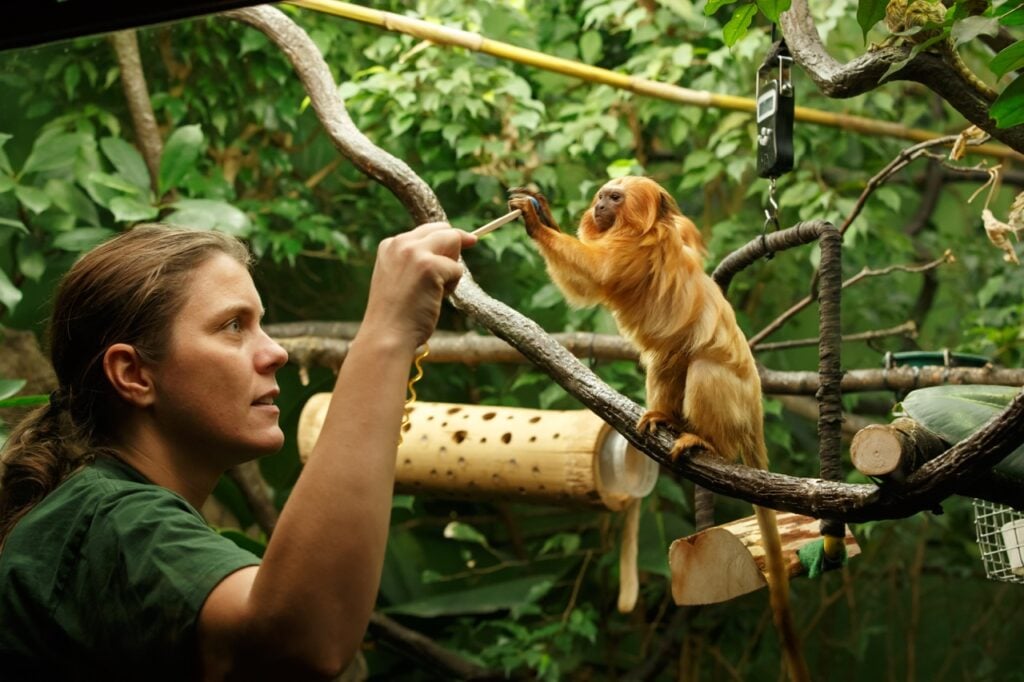
One of the clearest messages emerging from the Strategy is that welfare cannot be delegated to keepers, veterinarians or welfare committees alone.
”Animal welfare is an organisational responsibility that must influence decisions at every level of the institution.”
Boards influence welfare through governance and resource allocation. Senior leadership influences welfare through strategic priorities and organisational expectations. Managers influence welfare through operational systems, staffing structures and workplace culture. Animal care staff influence welfare through the countless day-to-day choices and interactions that directly affect the animals in their care.
In practice, the welfare experienced by animals is the cumulative product of these influences working together.
This matters because most welfare challenges do not arise through indifference or lack of commitment, but rather from the complexity of translating good intentions into consistently good practice yielding good outcomes. Challenges often emerge from competing priorities, resource constraints, legacy practices or organisational inertia. Addressing such challenges requires more than technical expertise. It requires leadership, commitment and a willingness to ensure that welfare considerations stay central to management responses.
In our experience, the organisations that make the greatest shifts in operational welfare are not necessarily those with the largest budgets or most impressive facilities. More often, they are institutions where welfare has become embedded within the culture of the organisation; where it informs discussions, shapes courses of action and is regarded as everyone’s responsibility rather than the domain of a particular department or committee.
Across the regions in which Wild Welfare works, animal care professionals are increasingly conversant with modern welfare concepts, from the Five Domains Model and behavioural management to positive reinforcement training and enrichment. Welfare workshops, conferences and professional development programmes have become a routine part of progressive zoos and aquariums and their importance is recognised by WAZA through its 2023 Animal Welfare Goal.
Yet awareness, important though it is, is still only the starting point. The task facing the profession today is less about defining good welfare and more about delivering it consistently and effectively; of translating those principles into day-to-day operational practice and sustaining them over time.
The barriers are rarely ideological; more often they are logistical, arising from the real-world inconvenience of implementation. Welfare is seldom constrained by a lack of intent but more often through the competing demands of running complex organisations.
This is why the Strategy’s emphasis on operationally relevant application is particularly valuable. Throughout the document there is an implicit recognition that welfare cannot be something to be simply declared achieved. It requires continual assessment, discussion, adaptation and refinement. In this sense, welfare should be viewed less as a destination and more as an on-going process.
The Strategy gives considerable prominence to welfare monitoring and assessment, and quite rightly so. Without objective information, institutions are left to rely largely on assumptions about how animals are experiencing their environment and management. However, one of the enduring lessons of modern welfare practice is that measuring welfare and improving welfare are not the same thing.
Whilst zoos and aquariums are increasingly carrying out and reviewing welfare assessments, the real value of these actions is only realised when these data are used to inform and drive decision-making. For example, if assessments raise concerns relating to social management, behavioural opportunities, habitat design, husbandry practices or healthcare procedures, institutions must be prepared to respond. Equally, if monitoring shows that a particular intervention is not delivering the intended welfare benefits, then management must be willing to adapt its approach. Without that willingness to act, welfare assessments are at risk of becoming little more than an administrative exercise.
This is where the concept of adaptive management becomes particularly relevant. Adaptive management recognises that welfare is dynamic rather than static, and that management practices should evolve in response to evidence. It is a continuous process of planning, monitoring, evaluating and adjusting. Put simply, it asks a straightforward but important question: what changed because of what we learned? The purpose of monitoring is not to produce reports or generate data. Its purpose is to improve the lives of animals.
Historically, welfare efforts focused on whether institutions meet a particular standard or accreditation requirement. Standards undoubtedly have a key role to play, but they are only part of the picture. The more meaningful question is whether or not a responsive system facilitates on-going welfare improvements.
The holistic concept that sits at the heart of the Strategy is not simply one of compliance, but of continual learning and refinement. Institutions that are genuinely committed to welfare improvement are prepared to identify both strengths and shortcomings, evaluate what is working and what is not, and adapt accordingly. In this way, welfare becomes a dynamic management process rather than a static achievement.
This inevitably requires a degree of honesty and self-reflection. No institution gets everything right, nor should perfection be the benchmark by which progress is judged. Welfare science continues to evolve, as does our depth of understanding of what animals need. As our understanding deepens, it is predictable that new challenges will appear with remarkable regularity. The institutions demonstrating meaningful progress are rarely convinced they have succeeded and thus regard the job as being complete. Instead, they are prepared to acknowledge that welfare can always be improved through repeated evaluation and refinement. The Strategy provides a useful pathway for facilitating that ongoing process.
The success of any welfare programme ultimately rests with those responsible for putting it into practice. Animal care staff are the individuals closest to the animals and are often the first to notice subtle behavioural changes, emerging welfare concerns or opportunities for positive change. It is therefore especially valuable that the Strategy places considerable emphasis on training, professional development and staff engagement, thereby recognising that lasting welfare improvements depend as much on people and organisational culture as they do on technical knowledge.
However, welfare culture cannot simply be mandated from a boardroom or embedded within a policy document. It must be cultivated throughout the organisation. Staff must be allowed to think critically and have the confidence that their observations will be heard, welfare concerns will be taken seriously, and that evidence gathered through monitoring and assessment will inform adaptive management. Equally important is ensuring that staff understand not only what is expected of them, but why particular welfare practices matter.
When animal care staff become active participants in the entire welfare process, welfare ceases to be another institutional programme and instead becomes an integral part of who that institution is. In the long term, that cultural shift may be one of the most important drivers of sustainable welfare provision.

An incisive contribution of the WAZA Animal Welfare Strategy is that it moves the conversation beyond the outdated notion that welfare and conservation are competing priorities. Throughout the document, welfare is positioned as an integral component of conservation practice, whether through species planning, population management, transport, research or conservation programmes. In doing so, the Strategy encourages institutions to recognise that caring for individual animals and conserving species are not opposing aims, but complementary responsibilities. This is particularly relevant at a time when zoos and aquariums are increasingly expected to demonstrate their contribution to both biodiversity conservation and animal wellbeing. The successful institutions will be those capable of achieving both.
An aspect of the Strategy that perhaps deserves greater attention is its recognition that responsibility for animal welfare does not end at the perimeter fence of a zoo or aquarium. Woven throughout the document is the idea that institutions have the potential to influence welfare outcomes far beyond the confines of their own boundaries. Through partnerships and collaborative engagement with a wide range of stakeholders, the opportunity to expand impact potential for lasting and positive welfare change dramatically increases. Collaborations to build training, research, capacity building, policy development or collaborative field programmes are promoted in the Strategy. Institutions are encouraged to view themselves not simply as providers of animal care, but as contributors to broader welfare advancement. The idea that zoos and aquariums can serve as catalysts for welfare oversight beyond their own facilities is core to Wild Welfare’s own operational approach.
The publication of the WAZA Animal Welfare Strategy will not, in itself, improve the welfare of a single animal. No strategy, policy or standard can do that. What it can do is provide institutions with a common context, a shared language and a workable roadmap for advancing welfare in zoos and aquariums globally.
With time, the value of the Strategy will be determined not by how widely it is cited, adopted or referenced, but by how it influences institutional judgement, changes management practices and advances the lived experiences of animals under human care.
Through Wild Welfare’s work across Africa, Asia, Latin America and the Middle East, one lesson has emerged with remarkable consistency: meaningful welfare outcomes occur when welfare becomes embedded within everyday management. It occurs when monitoring leads to action, when assessment informs operations, and when organisational management prioritises response to what the evidence reveals.
In this regard, the future of animal welfare will not be shaped by strategies alone. It will be shaped by institutions that remain willing to question, learn, adapt and improve. By creating the conditions necessary for continual progress to flourish, the WAZA Animal Welfare Strategy has the potential to drive meaningful advances in animal welfare, both within the WAZA community and far beyond it.

The World Association of Zoos and Aquariums (WAZA) is the global alliance of regional associations, national federations, zoos and aquariums, dedicated to the care and conservation of animals and their habitats around the world.


